Labels

Aalborg (3) Architecture (4) Århus (2) Culture (18) Denmark (12) Design (8) Education (9) Finland (2) History (3) Iceland (1) Inspiration (14) København (7) Literature (2) Music (2) Nature (8) Northern Russia (4) Norway (15) Research (2) Scandinavia (22) Society (1) Vikings/Varangians (1)
Showing posts with label Inspiration. Show all posts

Wednesday, 22 May 2013

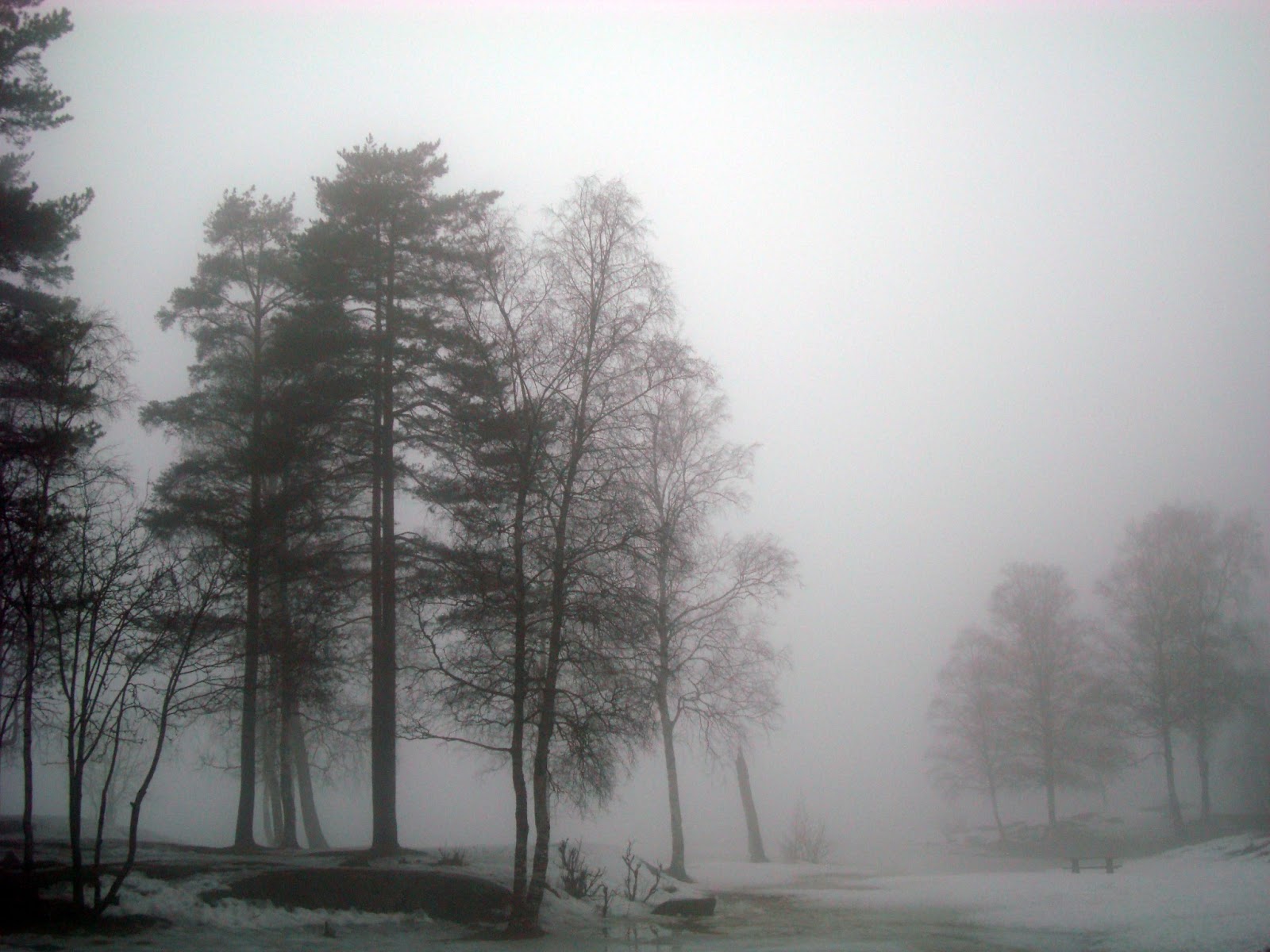
Winter fog / spring contrasts

Winter fog / spring contrasts in Oslo, Norway - images of the same trees/landscapes taken in winter and spring. Lucky to be here and experience such dramatic changes in a matter of couple of months!


Sunday, 12 May 2013

Dysthe Design. Swinging 60 Exhibition at Museum of Decorative Arts in Oslo

Skies design

This exhibition pays tribute to Sven Ivar Dysthe's (b.1931) 60-year long career as one of the most prominent designers of the postwar era. Already as a student at The Royal College of Art in London, Dysthe was entrusted with the honour of creating a gift box for Queen Elizabeth II's coronation in 1953. Upon returning to Norway, he brought a breath of fresh air to the design scene with a style that was Norwegian, but with clear international references.

Popcorn design
This confluence of Norwegian and international influences can best be seen in his furniture models, which have been the main area of focus throughout his career. It is here, that he has influenced, like few others, both the public and public spheres of design in Norway, as well as in Germany, the United Kingdom, and the USA. Laminette, 1001, Planet and Popcorn are some of hist most famous chairs. The latter two introduced the concept of pop-design in Norway, and have recently been submitted for reproduction.

As an industrial designer, Dysthe has produced a wide range of products - including shelving, kitchen fittings and lamps. Among his most innovative designs are his two-point ski-bindings made of hard plastic: Symmetric, Racer and Micro made for Bergans, a Norwegian outdoor equipment outfitter. Dysthe's design helped revolutionise ski-bindings worldwide.

Sven Invar Dysthe's strength as a designer is the ability to think through and develop a product down to the smallest detail, while finding simple solutions to complex problems. His expression of form

The exhibition is divided into three parts:
The first room showcases a 60-year retrospective of Sven Ivar Dysthe's design inventions.
The second room presents the international Dysthe and his design for public spaces during the 50s and 60s.
The last room shows a 'home life'-oriented Dysthe and features designs for home furnishings including collaborations with his wife, interior designer Trinelise Dysthe.


Tuesday, 12 February 2013

My best photo ever yet!

Thanks to Visit Oslo that shared this photo on their facebook page, the photo travelled the world and got more the 1,800 likes and 220 shares. Incredible to share my experiences with so many people all around the world!

Sunday, 27 January 2013

Tumblr blog

My other blog on Tumblr where I collect images from fellow bloggers/travellers/photographers

http://purrfect-designs.tumblr.com/

Simply amazing. Karelian Folk Music. Not Finnish, not Russian. Karelian

Karelian Folk Music Ensemble - Tui Tui Tuomenkukka 

Amazing folk song, played with Kantele, from the ancient land of forests and lakes. Not Russia or Finland. Even if they´re singing in Finnish and living in Russia, they are Karelian.


Saturday, 8 December 2012

Snow


Stopping By Woods on a Snowy Evening

Whose woods these are I think I know.
His house is in the village though;
He will not see me stopping here
To watch his woods fill up with snow.

My little horse must think it queer
To stop without a farmhouse near
Between the woods and frozen lake
The darkest evening of the year.

He gives his harness bells a shake
To ask if there is some mistake.
The only other sound's the sweep
Of easy wind and downy flake.

The woods are lovely, dark and deep.
But I have promises to keep,
And miles to go before I sleep,
And miles to go before I sleep.

Robert Frost
New Hampshire
1923

Monday, 3 December 2012

Tracing links between Scandinavia, Russia, and Bysantium through early arts

Vladimir’s (first Russian ruler*) choice of Greek-Orthodoxy in preference to Roman Catholicism may indeed have been in part determined, as the earlier Russian chronicles imply, by aesthetic considerations, for the Russian have from the earliest times shown themselves quick in the appreciation of beauty. Happening when it did, his choice resulted in the establishment of an almost exclusive link with Byzantium, not only in the religious sphere, but also with regard to cultural and artistic life. Kiev’s extensive commercial contacts with Europe, which at times extended as far west as Regensburg, might well have enabled the newly converted Principality to become integrated with Western Europe had not the animosity which separated the Orthodox faith of Constantinople from the Catholic Church of Rome inevitably forced the newly Christianised State to become firmly associated with Byzantium. Rome seems tacitly to have recognised the situation, for although a number of divines visited Kiev, and although commercial cities such as Novgorod took every opportunity to expand their western trade, no papal legate was ever appointed to Kiev. Yaroslav (1019-54), Vladimir’s younger son and successor, attempted to bring his country into European affairs, but he was never able to weave the Kievan State into the European framework, even though he himself married the Swedish princess Ingigerd, and three of his sons married the daughters of German princes and only the fourth a Byzantine princess, while one of his daughters became the wife of the King of France, another of the king of Hungary, and a third of the King of Norway […]

[…]The fact that so much was taken over from Byzantium was not due to Russian indolence, not to indifference, nor even was it for the sake of expediency; it was an entirely conscious process inspired by a sincere admiration for the Byzantine achievement, which evoked a profound and spontaneous response from the innermost depths of the Russian nature, thereby releasing to the full the spring of Russian creativeness.

That it should have done so is hardly to be wondered at, since, from the earliest times of which we have any knowledge, the inhabitants of the South Russian plain, and especially those in the vicinity of Kiev – the area which has in consequence often been described as the cradle of Russian civilisation – had come into contact with various alien cultures and had thereby acquired both the ability to select from these foreign cultures the elements which were most advantageous, and the skill to adapt them to their own need. Thus the Slav artists of both the late pagan and the Early Christian periods had remained unaffected by Scandinavian, or rather Varangian art, in spite of the fact that many of the Kievan princes including Rurik, the founder of the ruling horse, were of Norse extraction, and although a constant stream of Scandinavian merchants travelled along Russian’s great waterways, and numerous Varangian mercenaries continued over the years to enlist in the defence forces of the major Russian towns. Only occasionally do Norse elements appear, as for instance in the interlace patterns on the jewellery, especially on bracelets.

Illustration 1
This silver bangle (ill.1) was found on the site of Kiev’s Mikhailov-Zlatoverkh Monastery. It dates from the twelfth century and its decorations include birds of Byzantine origin, heraldic-looking beasts of oriental character, and interlace designs of Scandinavian inspiration.

And buckles (ill.2), on an infrequent stone capital or, more important, in the decoration of manuscripts.

Illustration 2
A capital letter from a Gospel dated to 1346 in which a bird of oriental character in intertwined in a Norse interlace, the extremities of which terminate in birds’ heads bearing a distinct resemblance to those which appear in Scythian art.

In exactly the same way the Scythians, some thirteen hundred years before, had made wide use in their decorative arts of both Achaemenid and Greek motifs, but had not reacted to the beauty of Persian or Greek architecture.

* Personal notes

From the Book: A concise history of Russian Art by Tamara Talbot Rice (London: Thames and Hudson)

Tuesday, 16 October 2012

"Under the Autumn Star" 1906 by Hamsun

«See, now I am well away from the rush and crowd of the city, from people and newspapers; I have fled away from it all, because of the calling that came to me once more from the quiet, lonely tracts where I belong. “It will all come right this time,” I tell myself, and am full of hope. Alas, I have fled from the city like this before, and afterwards returned. And fled away again.»

«Where are you off to? I don’t know. East or west. We’re wanderers.»

«The water was as clear as a mirror yesterday and is as clear again today. This is an Indian summer and it’s warm on the island – oh how mild and warm it is! – but there’s no sun. It’s years now since I’ve known such peace, twenty or thirty maybe, perhaps in some earlier life. For  it seems to me I must have known such peace before, the way I walk along here humming, and in ecstasy, mindful of each stone and each blade of grass, and these seem mindful of me too. We know each other.»

Under the Autumn Star (1906) is the first volume in the so-called wanderer trilogy. The main character here has Hamsun’s own real name, Knut Pedersen.

Pedersen is a middle-aged writer in flight from the city and the modern age. He wanders around, picking up work where he can, wandering on again. On the Øvrebø farm he is an observer of the unhappy marriage between Captain Falkenberg and his wife Lovise. When he begins to find himself attracted to the lady he moves on. Not until long afterwards does he find that his feelings were reciprocated.

The novel’s muted and melancholic style is suffused with the sense of longing and sadness for lost youth. There are also intense and lyrical descriptions of nature and a number of acute psychological portraits. Source: HamsunSenteret 

You can read the book following this ebook link

Monday, 15 October 2012

On Edvard Grieg (Norwegian composer)


Grieg’s collaboration with poets brought him into contact with some of the most romantic of all Norwegian literature, the sagas, folk tales and legends. However, Grieg also had a deep love of nature, he liked nothing better than hiking in the mountains around Bergen and up from Sogn through Jotunheimen. There, in the domain of the trolls, he found challenging peaks, which afforded him splendid vistas, shimmering, iridescent glaciers and tranquil plateaus, where he became acquainted with the Norwegian folk culture.